

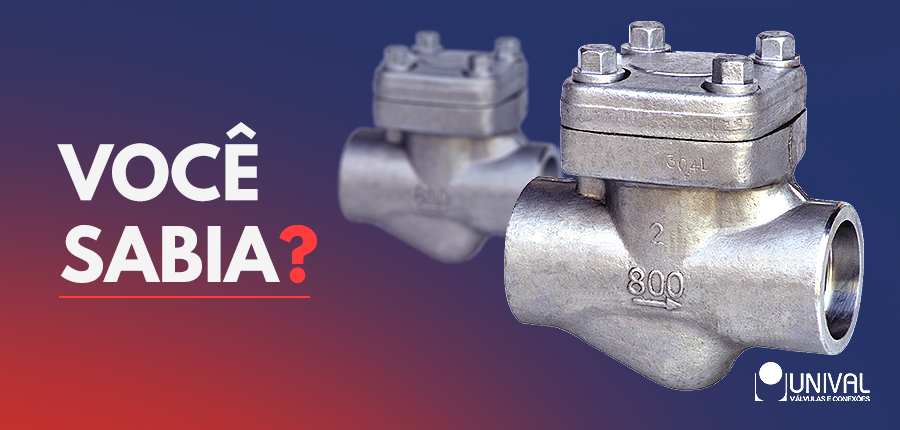
Check valves are used to quickly and automatically prevent the reversal of flow in a system. Their function is to allow flow in one direction and prevent it from returning in the opposite direction.
All are used for flow blocking, not control. They all utilize the fluid's own energy to perform their operational cycle, requiring no human or other external intervention.
Piston check valve:
The operation of the valve by a shutter (piston) that moves freely within a guide system attached to the valve body, which allows the flow to pass through the action of the fluid itself.
It also closes by reversing the flow direction or by gravity if there is no flow and the fluid pressure acting below the valve is insufficient to keep it away from the seat ring, providing a rapid closing action. As a self-operated valve, the valve's valve opens, closes, or changes its position in response to changes in volume and pressure that occur during the flow process.
The piston valve is suitable for operating with clean, compressible fluids that develop high flow velocities (turbulent flow). It is designed to operate only in horizontal pipelines and with the valve opening upward. The minimal clearance between the valve and its guide system makes this type of valve unsuitable for fluids containing suspended solid particles.