

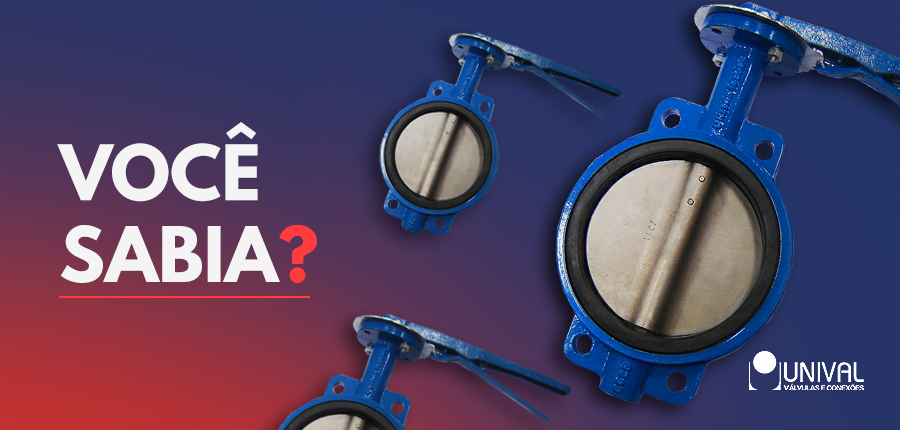
Butterfly valves can be used in a variety of situations, such as fluid control or complete isolation of flow passages. This type of valve belongs to the rotary group because its movable sealing element opens and closes by rotating on its own axis.
They generally cost less than other valve models and operate in a similar way to a ball valve.
It is practically the only model that can be chosen for low pressures and extremely high flow rates.
They are widely used in the chemical process industry. Their low weight and lower maintenance and installation costs contribute to their popularity, in addition to their excellent performance in firefighting equipment due to their quick and effective shutdown device.
Advantages
Low maintenance and installation costs;
Total isolation of the flow passage;
Good performance in firefighting equipment;
High pressure recovery;
They can operate as both control and shut-off valves;
Bidirectional, allowing the flow to flow in any direction;
Virtually the only model that can be chosen for low pressures and extremely high flow rates.
Disadvantages
Greater pressure loss than in the ball valve;
They are subject to cavitation (when liquid fluid), predicted and analyzed during valve sizing calculations.